
Breeding Obedience
The Ethics of Domestication and Consent

Consent is foundational to how we think about human relationships. It presumes autonomy: the ability to make free, informed choices. When it comes to dogs, this concept breaks down completely. Dogs cannot consent in the ways we understand it—not to their roles, their training, or their breeding.
Dogs are not just animals who have been tamed—they are animals who have been bred, generation after generation, to prioritize human needs over their own instincts. Their physical forms, temperaments, and even their capacity for survival outside human care have been shaped by us. In this sense, dogs exist as an extension of human desire: they were created to be violated, and molded to suit our purposes, often at the expense of their own autonomy.
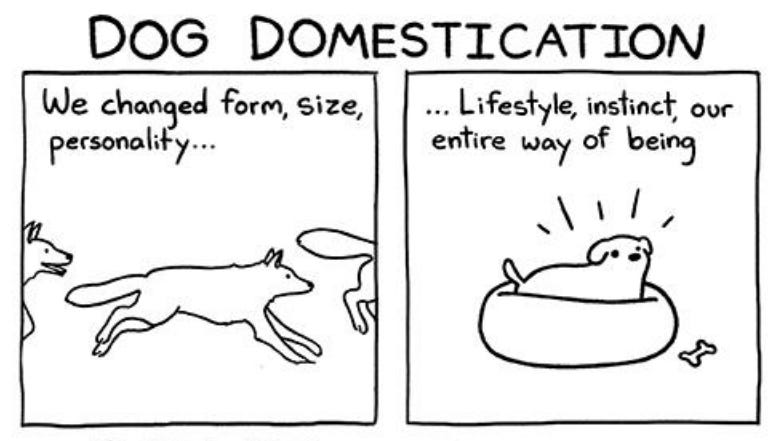
From the moment a dog is born, its life is orchestrated by humans. We decide when and how they are socialized, what behaviors are rewarded or punished, and, ultimately, what purpose they will serve. This orchestration is not inherently malicious—it’s often done with good intentions—but it remains a profound violation of agency. A dog does not choose to live in a human world. It is brought into that world, shaped by it, and often completely dependent on it.
This lack of autonomy is, perhaps, why domesticated animals are at the center of some of the most disturbing ethical violations, including bestiality. Unlike wild animals, dogs have been bred to trust and obey humans, even in situations that go against their instincts or cause them harm. Their domestication has made them uniquely vulnerable, precisely because their autonomy has been stripped away through generations of breeding and training.
Bestiality overwhelmingly involves domesticated species, with dogs and horses being the most common. Why? Because domesticated animals are bred to be compliant and attuned to human behavior. This makes them more likely to tolerate, and in some cases appear to reciprocate, human attention—even when that attention crosses boundaries. The same traits that make a dog loyal, affectionate, and eager to please also make them vulnerable to exploitation.
The fact that zoophilic relationships almost exclusively involve domesticated animals is not a coincidence—it is a direct consequence of how domestication shapes behavior. A wild animal’s resistance would make such an interaction nearly impossible, while a domesticated animal’s dependency and pliability make it tragically feasible.
If we accept that domestication is a process of stripping away autonomy, then we must also accept that the ethics of human-animal relationships are inherently compromised.